Pages

Sunday, 11 May 2014

Explantion Writing: How Paper is Recycled.


Explanation Writing

Purpose: To explain why and how things happen.

Text Structure:

  1. Title
  2. Identify Statement- What is to be explained.
  3. Explanation sequence- How does it happen.
  4. Summary Statement- What has the text explained.

Language Features:

  1. Nouns are used.
  2. Present tense verbs are used.
  3. Time and sequence words are used.

How is Paper Recycled.

Paper that has been used can be recycled.

First, people put used paper into special bins. Then, council workers take the paper to a recycling factory.

At the recycling factory, workers sort and shred the paper.

Next, machines mix the shredded paper with boiling water and chemicals to make a pulp.

After that, the workers pour the pulp into paper-making machines that make the new paper.

Finally, machines  make the new paper into products like writing paper, paper bags and paper towels.

Paper is recycled so that it can be used to make other paper products.


Recount Writing: Moon Walk.


Moon Walk.

Date: 20 September 2057
Day 4

Dad landed the lunar module safely on a flat area of the Moon’s surface at 0800 hours. I felt very excited to be the first child to walk on the Moon.

After the landing, Dad opened the small hatch and climbed down the ladder. I followed him, holding tightly onto the sides. Once I reached the bottom of the ladder, I took a deep breath and stepped onto the surface of the Moon near Dad. I felt like a kangaroo as I leapt into the air, leaving footprints in the dust.

A short time later, Dad collected some volcanic rocks and moon sites to the landing site.

At 0900 hours, I helped Dad load the equipment into the top part of the module. After that, we returned to our spaceship where Commander Tito was waiting for us.

I hope I can visit the Moon again in the future. It was an amazing experience.

Tragedy at Tangwai.


SCHOOL JOURNAL PART 4 NUMBER 3, 2000, PAGES 22 - 24

Tragedy at Tangiwai by Aaron Hanning


WALT: Learning to make predictions on what is going to happen next in the text by using the keywords in the preceding sentences and paragraphs.
SUCCESS CRITERIA: I am able to predict as to what is going to happen next in the text.

1. What do think happened after Cyril waved his torch at the approaching train?
After Cyril waved his torch at the approaching train, the train plunged into the mud-laden flood waters.
2. Where was Cyril going when the accident happened?
Cyril was going to the train’s sixth carriage and began rescuing passengers that were in the train.
3. How did Mrs. Bell help with rescue of the injured passengers?
Mrs. Bell helped with rescue of the injured passengers by driving to Waiouru to get help from a military camp.
4. How many people died in that accident?
151 people died in that accident.
5. Who broadcasted a special message of sympathy when the news of the disaster spread around the world?
The Queen broadcasted a special message of sympathy when the news of the disaster spread around the world.

Activity 2 - Dictionary and Vocabulary
1.  Locate these words in the text and then use an online dictionary to find the meanings
    of these words.
2.  Make sentences with these words.
Word
Meaning
Sentences
1. weather
The state of atmosphere at a particular place and time as regards heat, cloudiness, dryness, sunshine, wind, rain, etc.
The weather seemed fine today.
2. lahar
A destructive mudflow on the slopes of a volcano.
The lahar was terrifyingly high and steaming hot.
3. approaching
Come near or nearer to someone or something in distance time.
The train was approaching to the bridge.
4. wrecked
Any building, structure or thing reduced to a state of ruin.
The train was wrecked.
5. plunged
Fall suddenly and uncontrollably.
The car plunged into the water.
6. buckled
Bend and give way under pressure and strain.
The Earth buckled under the titanic stress.
7. assisted
Be present as a helper.
Two midwives who assisted at a water  birth.
8. military
The armed forces of a country.
As a young man, he joined the military  and pursued a career in the Army.
9. morgue
A newspaper’s collection of miscellaneous information for use in future obituaries.
A full-time obituaries editor in charge of the morgue.
10. survived
Continue to live or exist, especially in spite of danger or hardship.
Against all odds the child survived.

Activity 3 -  Click on the link below and then read the article on How Waves are Made. After you have read the article, write down five facts about How Waves are Made.
Facts.
  1. Waves can be made by wind.
  2. The wind transfers some of its energy in the water through friction between the air molecules and the water molecules to make waves.
  3. Low pressure systems make good and strong waves.
  4. The frictions created by wind help to form energy waves.
  5. In deep low pressure systems, wind speed is greater and more waves are generated by the power of the gusts.

Thursday, 3 April 2014

Dianne's Dream.


SCHOOL JOURNAL PART 4 NUMBER 1, 1999, PAGES 26 - 28

Dianne’s Dream  by Bill O’Brien

WALT: answer questions based on the text by looking for keywords in the questions.
Success Criteria: 1. I am able to identify and highlight the keywords in the question. 2. I am able to locate the keywords in the text and look for answers to the questions.

ACTIVITY 1 - READING RESPONSE
Read the text and then answer these questions based on the text.
1. Where did Dianne Hollands grow up?
Dianne Hollands grew up on a farm in Southland.
2. What was Dianne's dream all about?
Dianne’s dream was all about being a professional tennis player.
3. How long did Dianne spend training each day?
Dianne spent two hours of training each day.
4. What was Diannes greatest achievement?
Dianne’s greatest achievements was when she joined Tsunar Brown of Rotorua and Jane Ioaba of Auckland.
5. How old was Dianne when she won the Otago Premier Player of the Year?
Dianne was 13 years old, when she won the Otago Premiere Player.

Activity 2 - Vocabulary
WALT:  1. Use an online dictionary. 2. Look for meanings of words from the text I have read.
Success Criteria: 1. I am able to use an online dictionary. 2. I am able to say  the meanings of words

Read page 1 of the story and look for these words in the text. Then use a dictionary to find the meanings of these words.

Words
Dictionary Meanings
1.   prestigious
Inspiring respect and admiration having high status.
2.   ambition
A strong desire to do or to achieve something, typically requiring determination and hard work.
3.   achievement
A thing done successfully, typically by effort, courage, or skill.
4.   tournament
A series of contests between a number of competitors, who complete for an overall prize.
5.   talent
Natural aptitude or skill.
6.   dedicated
Devoted to a task or purpose.
7.   professional
Engaged in a specified activity as one’s main paid occupation rather than as a pastime.
8.   perfectionist
A person who refuses to accept any st
9.   popular
Liked, admired, or enjoyed by many people or by a particular person or group.
10. education
The process of receiving or giving systematic instruction at a school or a university.

Activity 3 - Blog
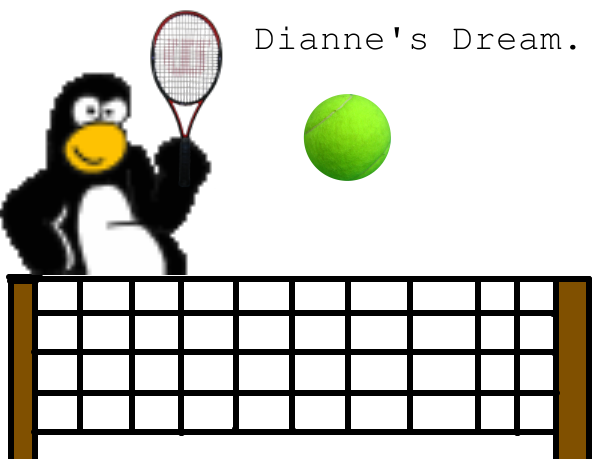
Use Sumo Paint to draw a picture based on this story and write about the picture. Edit your work and then put it up on your individual blog.

Diannes Dream
This picture is shows a penguin playing tennis.

Friday, 14 March 2014

In The Forest 3000 Years Ago.


IN THE FOREST 3000 YEARS AGO


WALT: answer questions based on the text by looking for keywords in the questions.
Success Criteria: 1. I am able to identify and highlight the keywords in the question.
                              2. I am able to locate the keywords in the text and look for answers to
                                  the questions.


ACTIVITY 1 - READING RESPONSE - Read Page 18 of the Article and then answer these questions based on the Article.

1.  Why did the Moa Bird rush  back to the shelter of the bush? The Moa Bird rushed back to the shelter of the bush, because the Haast’s eagle was chasing it.

2. What were the Takahe doing near the lake? The Takahe was carefully snipping the grass off near the ground.

3. Why did the Haast’s Eagle come rocketing down from the sky? The Haast’s eagle came rocketing from down from the sky because it wanted to serve the moa’s arteries.

4. As night fell, what noises could be heard from the forest? The noises that could be heard from the forest were the night insects.

5. Why do the kiwi, kakapo and the weka birds roam the forest at night? The kiwi, kakapo and the weka birds roamed the forest at night to look for food.

Activity 2 - Vocabulary

Make sentences with these words.

1.  investigate- I had to investigate about the missing person.
2.  background- I change my background.
3.  shapes- Everyone has different shapes and sizes.
4.  roaming- My baby brother was roaming around the house.
5.  covered- I covered myself with the blanket.
6.  suddenly- Suddenly I heard a loud noise.
7.  strange- I saw a strange figure at the back.
8.  through- We went through the tunnel and under the bridge.
9.  followed- My cousin followed me to the park.
10. somewhere- My cousin told me that we were going somewhere.


Activity 3 -  The New Zealand Kiwi
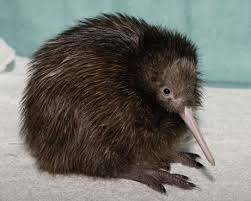
Google search for an image of the Kiwi bird and write five important facts about the Kiwi Bird.
http://www.whakatanekiwi.org.nz/about-new-zealand-kiwi/fast-facts.asp
  1. Kiwis are flightless birds.
  2. Kiwis have a strong musky smell that is irresistible to dogs.
  3. Little spotted kiwi and North Island brown kiwi breed in pairs and only the male incubates the egg.
  4. The kiwi egg is six times as big as normal as a bird its size, almost exactly the size of eggs produced by the now-extinct bush moa.
  5. A female kiwi can lay up to 100 eggs in her lifetime.
  6. Kiwi have one of the largest egg-to-body weight ratios of any bird. A mature kiwi egg averages 20 percent of the female’s body weight (compared to 2 percent for an ostrich). In human terms this would mean a 50 kilogram woman delivering a 10 kilogram baby!

The Kakapo.
http://www.arkive.org/kakapo/strigops-habroptila/
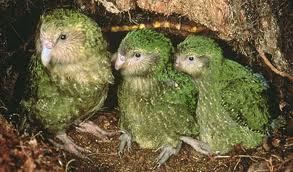
  1. The Kakapo is the world’s only flightless parrot and is also unusual in being nocturnal.
  2. The Kakapo is the world’s most heaviest parrot.
  3. The male Kakapo produces a strange “boom” call to attract potential mates, which can be heard up to 5 kilometres away.
  4. One of the world’s longest living birds. They can live up to an average of 90 years to a maximum of 120.
  5. A polygynous lek breeder.
  6. A non-flying bird.
  7. A parachutist from trees because it cannot fly.
  8. Critically endangered.

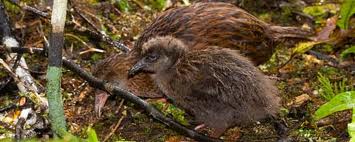
The Weka.
http://www.doc.govt.nz/conservation/native-animals/birds/birds-a-z/weka/facts/
  1. Weka mainly eat invertebrates and fruit. They occasionally eat chitons and other rocky invertebrates, lizards, rodents, food scraps, carrion and the eggs and young of other groundnesting bird.
  2. Weka populations are subject to large fluctuations. Populations increase during favourable conditions and decline abruptly when food becomes scarce. Moist islands and those with rich soils support the most stable populations.
  3. The decline and destabilisation of weka populations on mainland New Zealand, which has resulted in legal protection, has inhibited mahinga kai in modern times. Some iwi today welcome conservation projects that would potentially enable the restoration of harvesting while others believe that the time for harvest has gone. The only place where the legal harvest of weka can occur is on the Chatham Islands and on some islands around Stewart Island.
  4. Weka have demonstrated that under good conditions and with high food availability, they can be very productive with year-round breeding recorded at several sites. However, pairs in other stable populations breed once a year or less.
  5. Weka mate for life where the populations are territorial, but this is not so when the need for defence is less likely.

Tuesday, 11 March 2014

America's Cup

Bio Poem.


Bio Poem.

Alisi

Nice, helpful,  playful

Lover of eating lollies, going rock climbing and riding her bike.

Who feels happy when she is going to the movies.

Who wonders why there are volcanoes in the world.

Who fears spiders, clowns and death.

Who dreams to be a famous singer or a teacher.

Who is able to use her netbook well.

By Alisi